


UNIPA NEWS HAITI
Date: March 15, 2026
Cuba international relation discutions energy crisis, and growing social tensions.
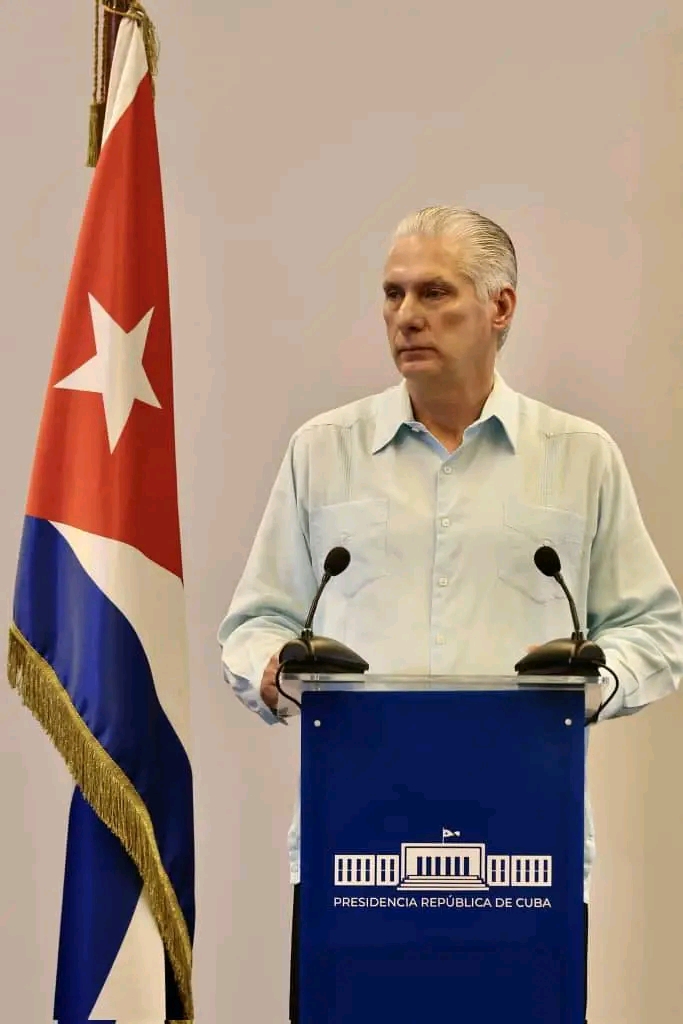
Miguel Díaz-Canel, First Secretary of the Central Committee of the Communist Party and President of Cuba, addressed national media on Friday, March 13. During his remarks, he spoke about diplomatic relations, the country’s economic situation, the energy crisis, and international cooperation.
Dialogue between Cuba and the United States
According to the president, Cuban officials recently held discussions with representatives of the government of the United States in an effort to seek solutions through dialogue regarding bilateral differences.
He emphasized that these exchanges are conducted under the principles of:
equality between nations
respect for sovereignty
reciprocity in international relations.
International relations and solidarity
President Díaz-Canel stated that Cuba maintains diplomatic relations with most countries around the world. He added that one of the key features of Cuba’s international policy is cooperation and solidarity, particularly through its medical missions, which have received international recognition.
International aid and support from Mexico
During the conference, the president also acknowledged support from Mexico, which he described as a “friendly and brotherly nation.”
Authorities stated that several donations are currently being received to support the population.
The government indicated that:
a national system has been organized to plan, distribute, and monitor these donations
donated food supplies are distributed free of charge to the population.
Role of the Cuban diaspora
Díaz-Canel also highlighted the importance of the Cuban community living abroad. According to him, the government intends to welcome Cuban residents overseas, listen to them, and encourage their participation in the country’s economic and social development.
He noted that many of them are professionals or technicians who represent a valuable component of the skilled workforce educated by the Cuban Revolution.
Energy situation and solar investments
The president acknowledged that energy shortages continue to affect the country’s productive capacity. He explained that the government is seeking to increase national oil and gas production while expanding renewable energy projects.
Among the measures mentioned:
expansion of new oil well exploitation
development of photovoltaic solar parks
installation of more than 900 solar systems in state enterprises
installation of 955 photovoltaic systems in isolated homes and social centers.
He stated that during daylight hours, solar parks generate between 49% and 51% of available electricity.
Impact on education and labor
Díaz-Canel admitted that the energy crisis is affecting the national education system, both in general education and higher education.
As a result, authorities have had to reorganize the educational curriculum and implement semi-presential learning models in certain institutions.
Despite the challenges, he reaffirmed that education and higher education remain fundamental priorities of the Cuban Revolution.
Protests and rising social tensions
Despite President Díaz-Canel’s efforts to maintain dialogue with the international community, the internal situation in the country has become more complex. Reports indicate that citizens in several cities have begun organizing protests related to economic difficulties and the ongoing energy crisis.
One notable incident occurred in the province of Villa Clara, where demonstrators reportedly entered official government offices and destroyed equipment. According to reports, laptops and other office materials were burned during the protests.
Observers note that this type of protest activity has rarely occurred in the region. The situation represents an additional challenge for President Díaz-Canel’s administration as authorities attempt to maintain political and social stability in the country.
Report sionel youte
UNIPA NEWS HAITI