
UNIPA NEWS(Tehran) 28 February 2026:The United States and Israel launched coordinated strikes on Iran on Saturday, marking a sharp escalation in Middle East tensions and opening what could become a new phase of regional conflict.
President Donald Trump said the United States had initiated “major combat operations” targeting Iran, warning that American casualties were possible. He stated that the objective of the strikes was to eliminate Iranian missile capabilities and neutralize its naval forces, arguing that the action was necessary to remove what he described as a security threat to the United States.
According to Trump, the strikes followed repeated warnings from Washington and Israel that further action would be taken if Tehran continued advancing its nuclear and ballistic missile programs.
“My administration has taken every possible step to minimise the risk to U.S. personnel in the region,” Trump said in a video posted on Truth Social. “Even so, and I do not make this statement lightly, the Iranian regime seeks to kill.”
Smoke was seen rising over the skyline of Tehran following explosions reported on Saturday.
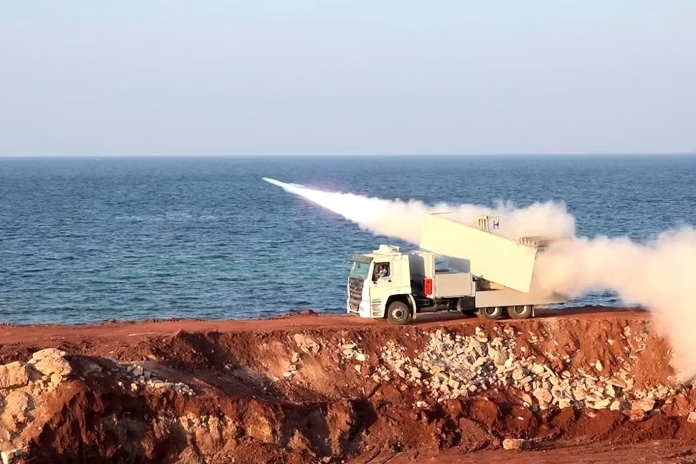
In response, Iran launched missiles toward Israel, according to the Israeli military, raising fears of broader confrontation across the region.
What Are Ballistic Missiles?
A ballistic missile is a rocket-powered weapon that is guided during its initial ascent phase but then follows a largely unpowered, free-fall trajectory toward its target. These missiles can carry warheads equipped with conventional explosives and, potentially, biological, chemical, or nuclear payloads, depending on a country’s capabilities.
Western governments view Iran’s ballistic missile arsenal as both a conventional military threat to Middle Eastern stability and a potential delivery system for nuclear weapons, should Tehran develop them. Iran has consistently denied seeking to build atomic bombs.
Iran’s Missile Arsenal and Range
Iran is believed to possess the largest stockpile of ballistic missiles in the Middle East, according to assessments by the U.S. intelligence community. Iranian officials have stated that the country has set a self-imposed maximum missile range of 2,000 kilometers (approximately 1,240 miles).
Tehran maintains that this range is sufficient for defensive purposes, as it enables its missiles to reach Israel and other regional targets if necessary.
The latest exchange of strikes has significantly heightened tensions, with the risk of further military escalation looming across the region.