
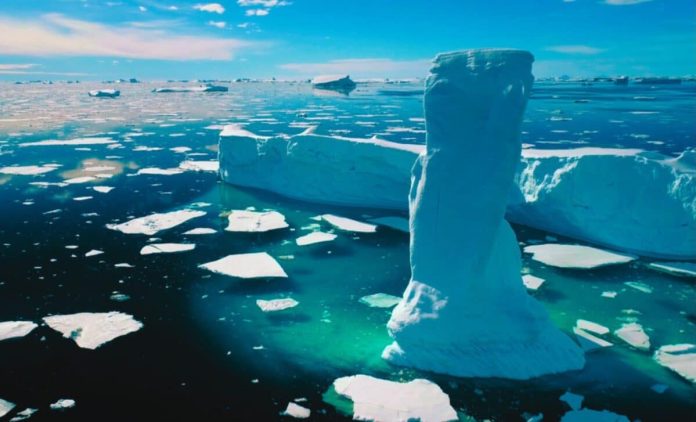

UNIPA NEWS DESK 21 June-An unprecedented winter heatwave in Antarctica brought rainfall to glaciers, exposed normally snow-covered terrain, and pushed temperatures to record highs, raising fresh concerns among scientists about the continent’s vulnerability to climate change.
Argentina’s Esperanza research station on the Trinity Peninsula recorded a temperature of 15.4 degrees Celsius on June 6, setting a new winter record and exceeding the previous high established in 1998 by more than 2 degrees Celsius. Daily maximum temperatures remained above freezing for three consecutive weeks.
Researchers said the heatwave was driven by unusually strong warm northerly winds that affected large parts of the Antarctic Peninsula. Nearby weather stations also recorded anomalously high temperatures, indicating the event was widespread rather than localized.
On King George Island, located near the northern tip of the Antarctic Peninsula, temperatures reached 4.6 degrees Celsius. Scientists reported rainfall on Collins Glacier, where snowfall would normally accumulate during winter.
Field observations showed significant changes in the landscape, with snow and ice giving way to exposed brown, grey, and green ground. Researchers who visited Collins Glacier found active surface melting, despite the glacier typically gaining mass during this period.
Climate scientists described the event as an extreme anomaly, with temperatures estimated to be approximately 20 degrees Celsius above seasonal averages.
While researchers cautioned that a single heatwave is unlikely to significantly affect global sea levels, they warned that such events may provide an indication of future conditions projected under continued global warming.
Recent climate modelling suggests that surface melting could expand into previously unaffected regions of Antarctica during the 21st century. The projections indicate that higher temperatures may increase the formation of liquid water on snow and ice surfaces, potentially reducing the continent’s ability to reflect solar radiation and altering local ecosystems.
Scientists also highlighted concerns over ice shelves, which act as natural barriers slowing the movement of land-based ice into the ocean. Increased surface meltwater can penetrate cracks within ice shelves through a process known as hydrofracture, potentially weakening their structural integrity.
Model projections indicate that several Antarctic ice shelves, including Larsen C, Pine Island, Thwaites, Abbott, Crosson, Getz, and Shackleton, could face elevated hydrofracture risks by the end of the century under high-emissions scenarios.
The findings underscore the significance of greenhouse gas emission pathways in determining Antarctica’s future. Researchers concluded that substantial reductions in global emissions would be necessary to stabilize surface melt at current levels and limit the expansion of melting across the continent.


