
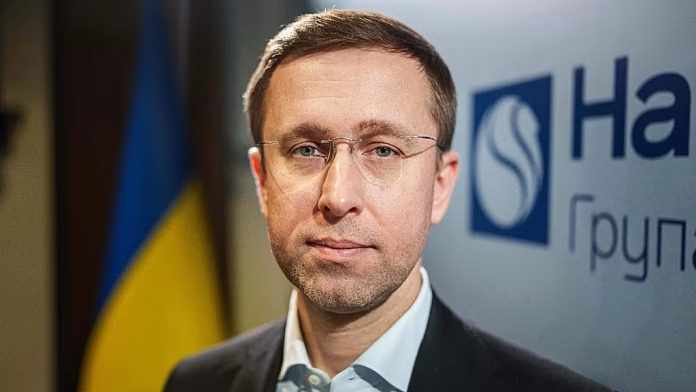

Kyiv | 16 July— Ukraine’s parliament has approved the appointment of Serhii Koretskyi as the country’s new prime minister, formalizing a key element of President Volodymyr Zelenskyy’s cabinet reshuffle as the country continues to confront Russia’s ongoing war and mounting pressure on its energy sector.
Koretskyi, who has served as chief executive of the state-owned energy company Naftogaz since May 2025, was nominated by President Zelenskyy on 15 July. His appointment received broad parliamentary support and drew considerably less political controversy than recent changes within the Defence Ministry.
David Arakhamia, head of Zelenskyy’s Servant of the People parliamentary faction, said Koretskyi’s experience in Ukraine’s energy sector would be critical as the country prepares for another winter amid continued Russian attacks on energy infrastructure.
Ukraine has identified safeguarding its energy system as a national priority, with Russian missile and drone strikes repeatedly targeting power generation and distribution facilities. Authorities have warned that maintaining stable electricity and heating supplies during the coming winter will remain one of the government’s most pressing challenges.
Before leading Naftogaz, Koretskyi held senior positions in Ukraine’s private energy industry. Between 2022 and 2025, he headed the state-owned companies Ukrnafta and Ukrtatnafta, overseeing operations during a period marked by Russia’s full-scale invasion and increased state management of strategic energy assets.
Since assuming leadership of Naftogaz in May 2025, Koretskyi has focused on maintaining the company’s operations and supporting the resilience of Ukraine’s energy infrastructure despite repeated attacks on production and supply facilities.
Koretskyi also recently accompanied President Zelenskyy to the NATO summit in Ankara, reflecting his growing role in Ukraine’s strategic energy and national security agenda.
His appointment comes as the Ukrainian government seeks to strengthen key state institutions while addressing the dual challenges of wartime governance and protecting critical infrastructure from continued Russian attacks.


