UNIPA News l London l March 12,2026
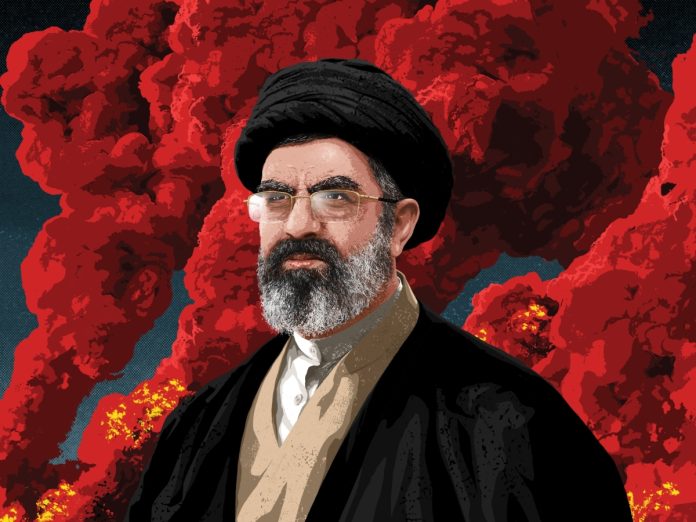
In a development that could reshape the political landscape of the Islamic Republic, Mojtaba Khamenei has been confirmed as Iran’s new Supreme Leader following the death of his father, Ali Khamenei. The decision was approved by the Assembly of Experts roughly a week after the senior leader was reportedly killed in a major military strike attributed to the United States and Israel.
The incident, which allegedly targeted high-ranking figures within Iran’s leadership structure, is said to have eliminated several senior officials and triggered intense uncertainty over the country’s leadership during a period of escalating regional conflict. The appointment of Mojtaba Khamenei has effectively ended speculation about a possible power vacuum at the top of Iran’s political system.
The leadership transition marks a historic moment for the Islamic Republic. Since the Iranian Revolution, Iran’s highest authority had never passed directly from father to son. The move has therefore drawn significant attention from analysts and policymakers, who view it as an unprecedented consolidation of influence within the Khamenei family.
Mojtaba Khamenei, a cleric who has long maintained a relatively low public profile, is believed to have played a behind-the-scenes role in Iran’s political and security circles for many years. Observers say he developed close ties with influential institutions such as the Islamic Revolutionary Guard Corps and conservative clerical networks, which have historically played a decisive role in shaping Iran’s domestic and foreign policies.
While he has not held many formal government posts, Mojtaba has been widely regarded as a powerful figure within the country’s political establishment. His proximity to key religious authorities and security leaders has long fueled speculation that he could eventually emerge as a successor to his father.
Iran now enters a new phase under its third Supreme Leader, at a time when the country is already facing severe geopolitical pressure and the possibility of a prolonged regional confrontation. Political analysts suggest that Mojtaba Khamenei’s leadership style, ideological outlook, and relationship with major state institutions will determine how Iran navigates the aftermath of the current crisis and the broader balance of power in the Middle East.
Questions also remain about the direction of Iran’s governance and foreign policy after the war, including how the new Supreme Leader will manage relations with rival powers and internal political factions.
The rise of Mojtaba Khamenei to the position of Supreme Leader therefore represents not only a generational shift but also a critical turning point for the future of the Islamic Republic.


