

UNIPA News | International Desk
U.S. Secretary of State Marco Rubio has said Cuba “needs new people in charge” as Washington continues to increase pressure on the island nation amid a deepening economic and energy crisis.
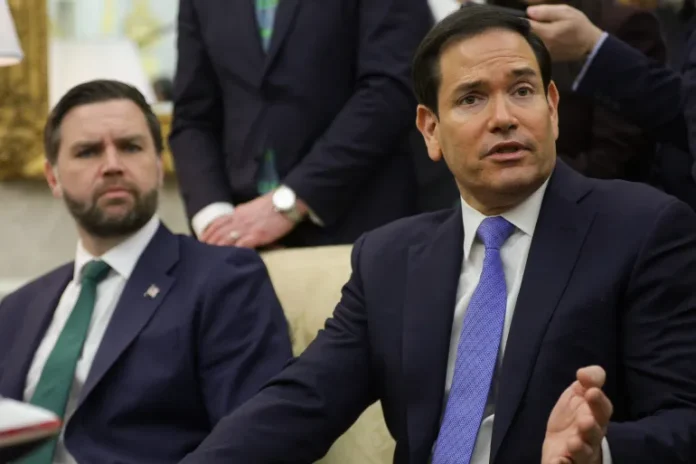
Speaking during an Oval Office event on Tuesday, Rubio criticized Cuba’s political and economic system, stating that the country is operating under “a model that simply does not work.”
His remarks come at a time when the United States has effectively tightened restrictions on fuel supplies to Cuba, a move that has significantly worsened the country’s long-standing economic struggles and contributed to widespread humanitarian concerns.
Rubio also dismissed recent measures announced by Havana allowing Cuban citizens living abroad to invest in businesses back home, saying the reforms fall short of what is needed to stabilize the situation.
“What they announced is not dramatic enough. It’s not going to fix the problem,” he said, adding that Cuban authorities now face “major decisions.”
The U.S. top diplomat further argued that Cuba has historically depended on external subsidies since the 1950s revolution, and claimed that the current leadership lacks the ability to resolve the crisis.
“They have survived on subsidies, but the people in charge don’t know how to fix it,” Rubio said. “So they have to get new people in charge.”
Meanwhile, U.S. President Donald Trump has hinted at imminent action regarding Cuba. A day after suggesting he could “take” the island, Trump told reporters on Tuesday that Washington would be making a move “very soon.”
Several U.S. media reports indicate that the administration is pushing for Cuban President Miguel Díaz-Canel to step down, although no details have been provided about any potential successor.
The developments come against the backdrop of decades-long U.S. sanctions on Cuba, which have intensified in recent months. A nationwide power outage earlier this week further highlighted the severity of the crisis, with large parts of the country left without electricity before partial restoration began.
Cuba’s capital, Havana—home to around 1.7 million people—was among the hardest hit, underscoring the fragile state of the country’s energy infrastructure and the mounting challenges facing its population.


