
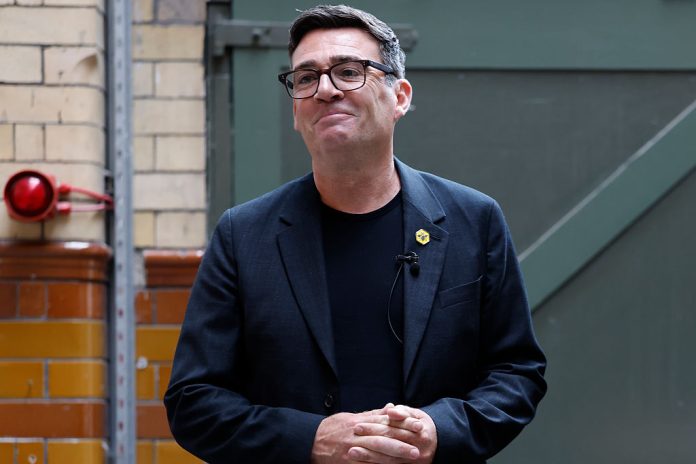

LONDON, June 29 — Andy Burnham on Monday outlined a sweeping domestic agenda aimed at decentralising power, boosting regional development and tackling Britain’s cost-of-living crisis, as he positioned himself to become the country’s next prime minister.
Speaking at the People’s History Museum in Manchester, Burnham pledged what he described as Britain’s “biggest rebalancing of power,” promising to transfer greater authority from central government to regional administrations while maintaining the current government’s fiscal rules.
Burnham said his proposed reforms would include a large-scale social housing programme, increased local control over water and other utilities, civil service reform, and measures to support reindustrialisation and youth employment.
He also announced plans to establish a “Number 10 North” in Manchester, where part of the Prime Minister’s Office would oversee housing policy, utility reform and industrial strategy alongside operations in Downing Street.
Drawing on his experience as Mayor of Greater Manchester, Burnham argued that a more collaborative model of governance would replace what he described as the “business as usual” approach in Westminster. He said devolving power to local communities would improve public services and promote economic growth across the country.
Addressing concerns over public finances, Burnham reaffirmed his commitment to existing fiscal rules, stating that his government would pursue reforms while maintaining budget discipline and economic stability. Following his remarks, Britain’s 10-year government borrowing costs edged lower and sterling posted modest gains against the U.S. dollar.
Burnham is expected to take office as Britain’s next prime minister after the Labour Party leadership transition, following Keir Starmer’s announcement that he would step down.
His proposals received support from senior Labour figures, including former health minister Wes Streeting, who welcomed Burnham’s agenda and said it offered renewed optimism for the party.
Opposition Conservatives questioned the practicality of Burnham’s plans. Conservative leader Kemi Badenoch criticised the speech, arguing that Burnham had failed to provide sufficient detail on how his proposals would be implemented and urged him to present a clearer governing strategy.
Burnham is expected to face significant economic and political challenges, including weak economic growth, persistent cost-of-living pressures and limited fiscal flexibility.


