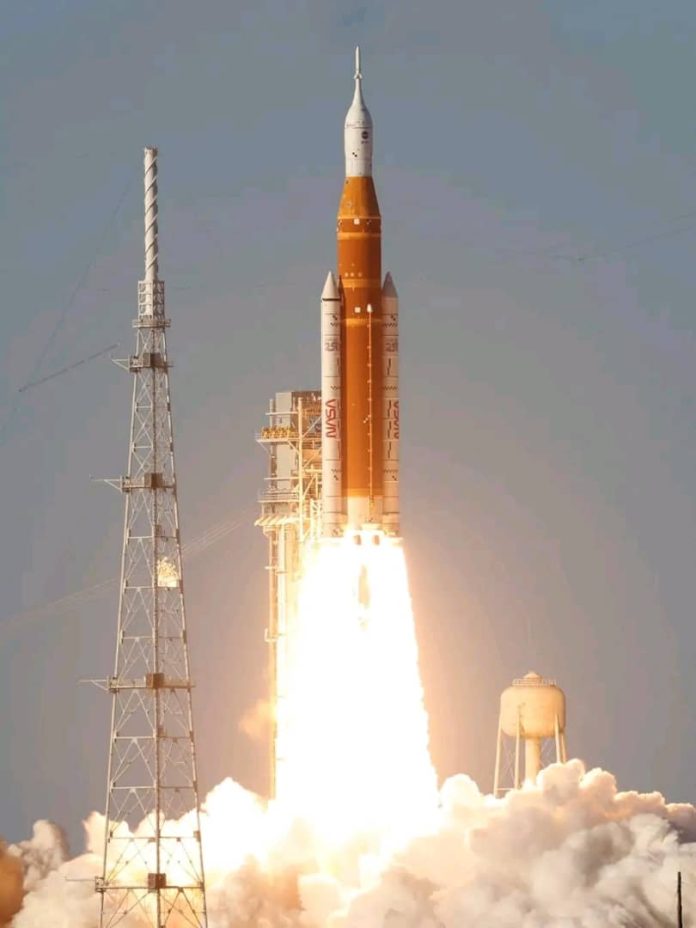
In a historic milestone for humanity, four astronauts aboard the Orion spacecraft have successfully lifted off, marking the first crewed mission toward the Moon in more than half a century.
The mission, known as Artemis II, represents a bold step forward in space exploration led by NASA. The launch signals a renewed human presence beyond Earth orbit, echoing the legacy of the Apollo program, which last sent astronauts to the Moon in 1972.
A New Era of Exploration
The Artemis II crew is expected to travel around the Moon without landing, testing critical systems that will pave the way for future lunar missions. This journey marks a crucial step toward establishing a sustainable human presence on the Moon and eventually preparing for missions to Mars.
The launch drew global attention, with millions watching as the rocket carried the astronauts safely into orbit. Scientists and engineers describe the mission as a turning point in modern space exploration, combining decades of technological advancements with renewed international ambition.
Global Significance
The Artemis program is not only a U.S. effort but also a symbol of international collaboration. It aims to expand scientific knowledge, inspire future generations, and strengthen partnerships in space exploration.
For many observers, this mission represents more than a technical achievement—it is a reminder of humanity’s shared curiosity and determination to explore beyond our planet.
What Happens Next
The crew will perform a lunar flyby mission
Systems aboard the Orion capsule will be tested in deep space
Data collected will prepare the next missions for a future lunar la
Sionel Youte Reporting:
“Liftoff confirmed. Humanity is once again reaching beyond Earth. This mission symbolizes hope, innovation, and a new chapter in space history. The world is watching.”
Report Sionel Youte
UNIPA NEWS HAITI