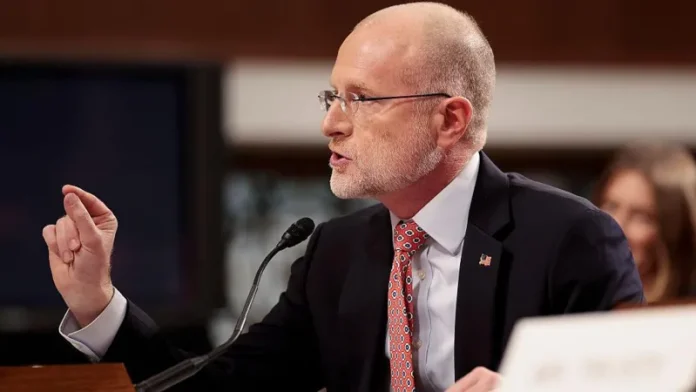

UNIPA News (LONDON): The Chair of the United States Federal Communications Commission (FCC), Brendan Carr, has signalled a tough stance against broadcasters, warning that their licences could be revoked if they fail to serve the public interest in their coverage of the ongoing US-Israel war with Iran.
In an interview with CBS News, the US partner of the BBC, Carr said that broadcast licences are not a “permanent property right.” According to him, if a station acts against the public interest, it could face the risk of losing its licence.
His remarks came after US President Donald Trump strongly criticised several media outlets over their reporting on the Iran war. Carr accused some broadcasters of spreading “hoaxes and distorted news,” though he added that they still have the opportunity to “correct course” before their licence renewals.
Several Democratic lawmakers, however, strongly criticised Carr’s comments. They argued that such threats conflict with the principles of free speech protected by the First Amendment of the US Constitution.
Massachusetts Senator Elizabeth Warren said it is illegal for the government to suppress speech simply because it dislikes reporting related to Trump’s Iran war. California Governor Gavin Newsom described Carr’s warning as “flagrantly unconstitutional.” Senator Mark Kelly also criticised the move, saying the administration appears unwilling to face scrutiny and accountability.
The Federal Communications Commission is the US regulatory body overseeing broadcast media, including radio, television and satellite transmissions. It grants licences to broadcast stations, usually for an eight-year period. However, these licences apply to individual stations rather than television networks themselves.
According to the FCC’s official website, the First Amendment and the Communications Act prohibit the commission from censoring broadcast content. The agency’s authority over content standards is also limited and applies primarily to television and radio broadcasts, not to cable networks or streaming platforms.
The recent controversy has sparked renewed debate in the United States about media freedom and the role of regulatory agencies in overseeing broadcast journalism.