
KINSHASA, Democratic Republic of Congo — The Ebola outbreak in the Democratic Republic of Congo is spreading rapidly, with more than 2,500 deaths reported over the past three months and the affected area now extending across a region larger than France, according to UN disease-response coordinator Julien Harneis.
Harneis said the outbreak is expanding faster than the international response, with more than half of the reported deaths occurring during the past 20 days. More than 5,000 cases have been recorded since May, placing additional pressure on an already weakened health system.
The response has been severely affected by armed conflict and population displacement. Harneis said about one million people have been displaced in the affected area, while insecurity has disrupted law enforcement and fragmented essential services, particularly health care.
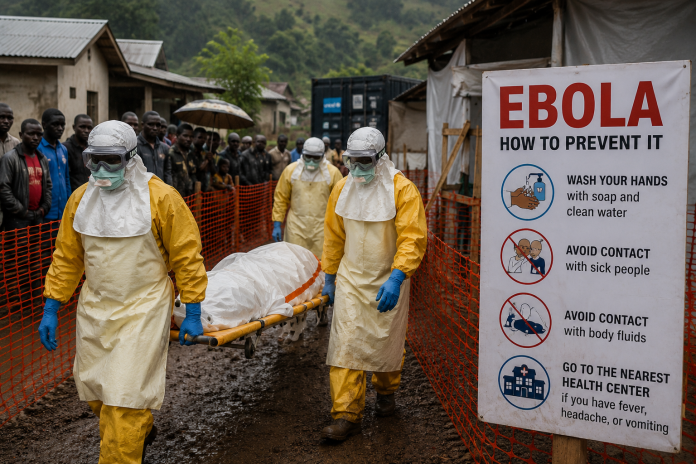
Health workers are also among those affected. According to Harneis, 160 health-care workers have contracted Ebola and 43 have died. Medical personnel and other frontline workers have faced attacks, while ambulances have been burned or damaged and health facilities have come under attack.
Poor transport infrastructure is further complicating the response. Difficult roads have restricted the movement of medical personnel and supplies, while weaknesses in the health system and limited banking services have made it harder to finance and sustain frontline operations.
Humanitarian funding shortages have added to the pressure. Harneis said reductions in humanitarian funding over recent years, particularly during the past two years, have reduced the operational capacity of humanitarian organizations by more than 30 percent.
Five government-led integrated operational packages have been launched to strengthen the response. The measures include expanded community engagement, improved disease surveillance, additional safe and dignified burial teams and increased treatment capacity.
The response has received about $80 million in funding so far, but Harneis warned that the available resources could soon be exhausted.
He called for significantly greater international financial and operational support, warning that delays in funding and implementation could increase the death toll, make containment more difficult and raise the overall cost of controlling the outbreak.