
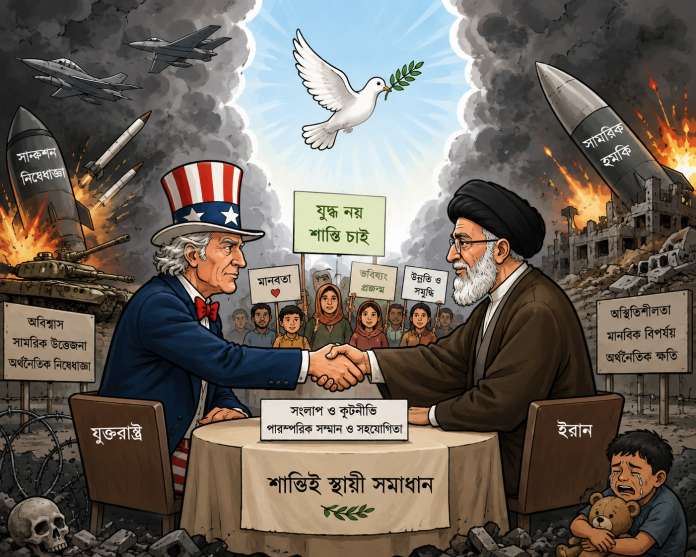

The long-standing conflict between Iran and the United States continues to be one of the most significant sources of instability in the Middle East. Rooted in decades of political mistrust, economic sanctions, and military tensions, the relationship has repeatedly brought the region to the brink of wider war. Recent escalations have once again reminded the world that military confrontation carries enormous human, economic, and geopolitical costs.
Both nations have legitimate security concerns, yet responding through force risks worsening an already fragile regional situation. Armed conflict not only threatens the lives of soldiers but also places millions of civilians at risk. It disrupts global energy markets, weakens economic stability, and increases uncertainty for countries far beyond the Middle East.
History has shown that wars rarely produce lasting peace. Instead, they often deepen resentment, create humanitarian crises, and make future negotiations more difficult. The international community must therefore encourage dialogue, confidence-building measures, and respect for international law rather than supporting actions that could escalate violence.
Diplomacy remains the most effective path toward resolving disputes over regional security, nuclear concerns, and political differences. Constructive engagement, supported by international organizations and responsible global leadership, can reduce tensions and promote long-term stability.
The world cannot afford another prolonged conflict in the Middle East. The Iran–U.S. dispute should serve as a reminder that peace is achieved not through military superiority but through mutual respect, negotiation, and cooperation. Lasting security will come only when both sides choose dialogue over confrontation and prioritize the well-being of people over political rivalry.The long-standing conflict between Iran and the United States continues to be one of the most significant sources of instability in the Middle East. Rooted in decades of political mistrust, economic sanctions, and military tensions, the relationship has repeatedly brought the region to the brink of wider war. Recent escalations have once again reminded the world that military confrontation carries enormous human, economic, and geopolitical costs.
Both nations have legitimate security concerns, yet responding through force risks worsening an already fragile regional situation. Armed conflict not only threatens the lives of soldiers but also places millions of civilians at risk. It disrupts global energy markets, weakens economic stability, and increases uncertainty for countries far beyond the Middle East.
History has shown that wars rarely produce lasting peace. Instead, they often deepen resentment, create humanitarian crises, and make future negotiations more difficult. The international community must therefore encourage dialogue, confidence-building measures, and respect for international law rather than supporting actions that could escalate violence.
Diplomacy remains the most effective path toward resolving disputes over regional security, nuclear concerns, and political differences. Constructive engagement, supported by international organizations and responsible global leadership, can reduce tensions and promote long-term stability.
The world cannot afford another prolonged conflict in the Middle East. The Iran–U.S. dispute should serve as a reminder that peace is achieved not through military superiority but through mutual respect, negotiation, and cooperation. Lasting security will come only when both sides choose dialogue over confrontation and prioritize the well-being of people over political rivalry.