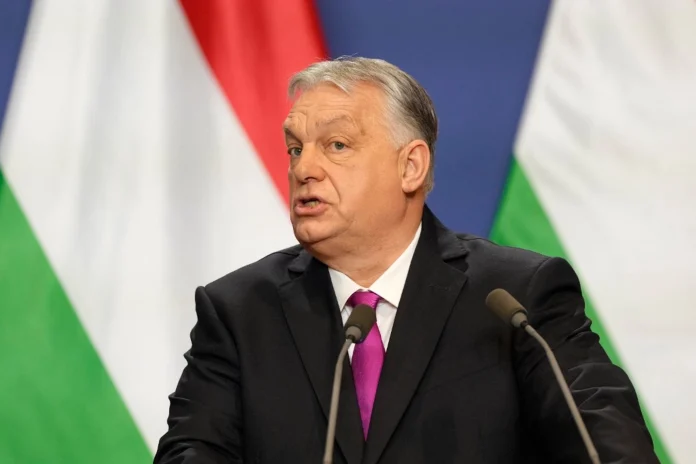
Budapest/Brussels, Friday — Viktor Orbán has threatened to block the European Union’s proposed €90 billion ($105 billion) financial assistance package to Ukraine, citing the continued suspension of oil transit to Hungary through Russia’s Druzhba pipeline.
The Hungarian Prime Minister said the loan would remain vetoed until oil deliveries resume via the Druzhba pipeline, a major Soviet-era oil route that carries crude from Russia through Ukraine to Slovakia and Hungary.
Kyiv, however, maintains that the pipeline is currently non-operational due to damage caused by a Russian missile strike near the western Ukrainian city of Brody. Ukrainian officials deny deliberately blocking oil transit.
Taking to Facebook, Orbán described the situation as “extraordinary,” writing:
“As long as Ukraine blocks the Friendship oil pipeline, Hungary will block the €90 billion Ukrainian war loan. We cannot be blackmailed.”
His remarks were reinforced by Hungarian Foreign Minister Péter Szijjártó, who accused Ukraine of “breaching its commitments to the European Union” by halting the pipeline’s operations. Posting on X, Szijjártó alleged that Kyiv was attempting to create supply disruptions in Hungary in coordination with Brussels and Hungary’s political opposition.
“Ukraine is blackmailing Hungary by halting oil transit … to push fuel prices higher before the elections,” he claimed.
As a member state of the European Union, Hungary retains the right to veto collective EU decisions, including major financial aid packages. Although Budapest secured an exemption from directly contributing to the proposed loan, it can still block the initiative at the EU level.
The European Commission had earlier explored funding Ukraine through a mechanism backed by frozen Russian assets — a so-called “reparations loan.” Diplomats in Brussels reportedly examined legal avenues to prevent a single member state from derailing the plan, highlighting growing tensions within the bloc over Ukraine support.
Orbán’s stance also comes at a politically sensitive moment at home. His ruling Fidesz party is facing its first serious electoral challenge in nearly 16 years from opposition leader Péter Magyar and his Tisza party.
Parliamentary elections are scheduled for April 12, and recent opinion polls suggest tightening competition. Critics argue that Orbán’s government has intensified rhetoric portraying Brussels as attempting to drag Hungary into a prolonged and costly war against Russia.
On Thursday, Magyar called on Orbán to apologize for circulating what appeared to be an AI-generated video depicting a Hungarian child witnessing her father’s execution by a figure in a Nazi-style uniform — a move widely condemned by opposition voices.
The dispute underscores the fragile balance within the EU as member states navigate energy security concerns, wartime diplomacy, and domestic political pressures. With Hungary holding veto power, the future of the €90 billion assistance package to Ukraine remains uncertain.
As tensions persist over energy transit and financial commitments, Brussels faces the complex challenge of maintaining unity while supporting Ukraine amid its ongoing war with Russia.