
UNIPA News(25 Fewbruary)Iran is close to finalising a deal with China to purchase advanced anti-ship cruise missiles, according to six sources familiar with the negotiations, at a time when the United States is deploying significant naval forces near Iran amid escalating tensions.
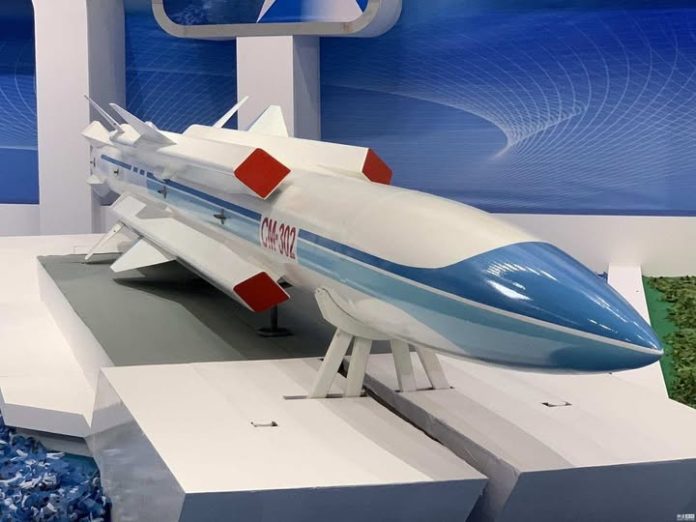
The proposed agreement involves the Chinese-made CM-302 supersonic anti-ship missile system. While the deal is said to be in its final stages, no delivery timeline has yet been confirmed. The CM-302 has a reported range of approximately 290 kilometres and is designed to fly at low altitude and high speed, making interception difficult. Defence analysts say the system would substantially enhance Iran’s maritime strike capabilities and pose a heightened risk to US naval assets operating in the region.
Talks between Tehran and Beijing over the missile systems reportedly began at least two years ago but accelerated sharply following the 12-day conflict between Israel and Iran in June. Sources include three officials briefed by the Iranian government and three security officials with knowledge of the discussions. As negotiations advanced last summer, senior Iranian defence and government representatives, including Deputy Defence Minister Massoud Oraei, travelled to China, according to two of the security officials.
Danny Citrinowicz, a former Israeli intelligence officer and senior Iran researcher at Israel’s Institute for National Security Studies, described the potential acquisition as a “gamechanger,” noting that supersonic anti-ship missiles are extremely challenging to intercept.
Details regarding the number of missiles involved, the financial terms of the deal, and whether Beijing will ultimately proceed remain unclear. An Iranian foreign ministry official stated that Iran maintains military and security agreements with its allies and that the current circumstances make it appropriate to utilise those arrangements.
Following publication of the report, China’s Ministry of Foreign Affairs said it was not aware of discussions concerning a potential missile sale. China’s defence ministry did not respond to requests for comment.
The White House did not directly address the reported negotiations. A US official reiterated President Donald Trump’s position that Iran must reach an agreement over its nuclear programme or face serious consequences, referencing previous confrontations.
If completed, the transfer would represent one of the most advanced Chinese weapons systems supplied to Iran in decades. It would also raise questions regarding United Nations arms restrictions first imposed in 2006, suspended under the 2015 nuclear agreement, and reimposed last September.
The potential sale highlights deepening military cooperation between China and Iran amid growing regional instability. China, Iran and Russia regularly conduct joint naval exercises, and Washington has previously sanctioned Chinese entities for allegedly supplying missile-related materials to Iran’s Islamic Revolutionary Guard Corps. Beijing has denied those allegations, stating that it strictly enforces export controls.
The development comes as the United States assembles a substantial naval presence within operational range of Iran. The aircraft carriers USS Abraham Lincoln and USS Gerald R. Ford, along with their strike groups, are being positioned in the region. Together, the carrier groups can deploy more than 5,000 personnel and around 150 aircraft.
President Trump recently set a 10-day deadline for Iran to reach a nuclear agreement, warning of potential military action if talks fail. US officials have indicated preparations are underway for the possibility of extended military operations should an order be issued.
Experts note that Iran’s missile arsenal was significantly depleted during last year’s conflict, making the CM-302 acquisition strategically significant. Manufactured by China Aerospace Science and Industry Corporation (CASIC), the missile system can be deployed from ships, aircraft or mobile ground platforms and is marketed as capable of targeting large naval vessels and certain land targets.
Sources further indicate that Iran is also exploring the purchase of additional Chinese military systems, including surface-to-air missiles, man-portable air defence systems (MANPADS), anti-ballistic missile technology and anti-satellite capabilities.
China was a major arms supplier to Iran during the 1980s, though large-scale transfers declined in the late 1990s under international pressure. In recent years, US officials have accused Chinese firms of providing missile-related components to Iran, but there have been no confirmed reports of complete missile system transfers.
The reported negotiations underscore shifting geopolitical alignments in the Middle East and the increasing complexity of US efforts to contain Iran’s missile and nuclear ambitions.