

UNIPA News(Kathmandu)15 June -Nepal’s tea industry has entered a severe crisis following the implementation of new quality-testing requirements by India, leading to a halt in exports, factory closures, and growing concerns over the livelihoods of thousands of workers and farmers.
Fifty-three tea factories in eastern Nepal’s Ilam district suspended operations on June 15 after large volumes of tea became stranded in the Indian market under mandatory testing procedures. In neighboring Jhapa district, 30 additional factories and more than a dozen tea estates have announced plans to shut down from June 18, with operators stating that closures will continue until export restrictions are eased.
Industry representatives said more than 300,000 kilograms of Nepali tea already transported to India remains held up awaiting test results, while over 700,000 kilograms of processed tea has accumulated in factory warehouses. Factory owners reported that storage facilities have reached capacity, preventing further production and affecting their ability to pay farmers for green tea leaves.
The disruption follows a Standard Operating Procedure introduced by India’s Tea Board on May 1, requiring compulsory quality testing of every tea consignment imported from Nepal. Producers said obtaining test results can take more than two weeks, during which products cannot be sold. Consignments that fail testing face the prospect of being returned or destroyed, increasing financial risks for exporters.
According to the Suryodaya Orthodox Tea Producers Association Nepal, the situation has made continued factory operations economically unviable. Association officials stated that processed tea remains unsold despite farmers having already supplied raw materials and producers incurring production costs.
Tea entrepreneurs and industry leaders argued that if quality concerns existed, testing should have been conducted at border entry points rather than after consignments had entered the market. They described the current system as creating uncertainty and disrupting established trade flows.
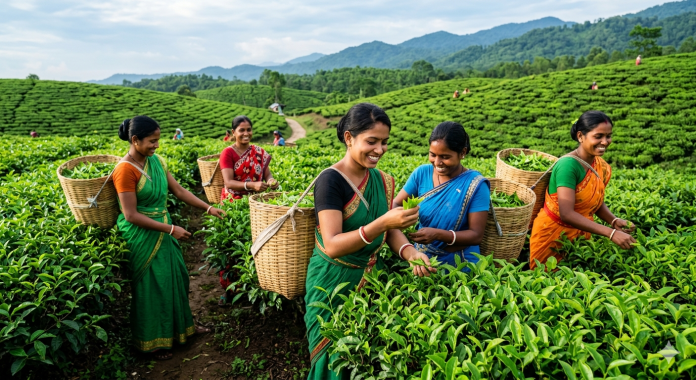
The crisis is expected to have significant economic consequences for tea-growing communities. In Suryodaya Municipality alone, nearly 3,000 farmers are engaged in tea cultivation, producing approximately 20 million kilograms of green tea leaves annually. Tea cultivation covers more than 33,000 ropanis of land in the municipality.
National Tea and Coffee Development Board officials said Nepal exports more than 7 million kilograms of orthodox tea each year, with over 90 percent destined for the Indian market. The industry’s heavy dependence on a single export destination has heightened the impact of the current disruption.
Local governments and industry organizations have characterized India’s measures as a non-tariff barrier and urged Nepal’s federal government to pursue immediate diplomatic engagement. Tea traders, factory owners, and farmers have called for urgent negotiations to secure the release of stranded consignments and restore normal export operations.
Lawmakers have also pressed the government to intervene through diplomatic and ministerial channels. Calls have been made for transparent, predictable, and time-bound testing procedures, mutual recognition of certificates issued by Nepali laboratories, expedited clearance of pending shipments, and financial support for affected producers.
Tea is cultivated on more than 10,000 hectares of land in Jhapa district, where over 20,000 farmers and workers are directly involved in the sector. Industry representatives warned that prolonged export disruptions could threaten employment, reduce foreign-exchange earnings, and affect thousands of families dependent on Nepal’s tea industry.


