
UNIPA NEWS,09 JULY || DOHA — Qatar’s Cabinet on Wednesday strongly condemned what it described as Iranian attacks targeting Qatari, Saudi, Bahraini and Kuwaiti interests, warning that Doha reserves its full rights under international law to protect its national assets and interests.
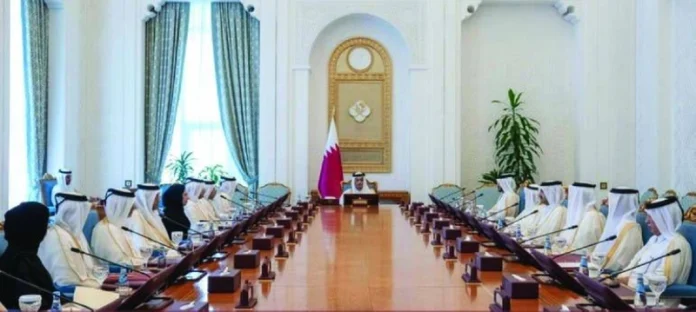
The weekly Cabinet meeting, chaired by Prime Minister and Minister of Foreign Affairs Sheikh Mohammed bin Abdulrahman bin Jassim Al-Thani, reaffirmed Qatar’s condemnation of the reported targeting of the Qatari tanker Al Rekayyat while transiting near the Strait of Hormuz.
According to a statement issued after the meeting by Minister of Justice and Minister of State for Cabinet Affairs Ibrahim bin Ali Al-Mohannadi, the government described the incident as a serious violation of international maritime safety, a threat to global energy security and regional stability, and a breach of international law.
The Cabinet called on Iran to immediately cease what it described as dangerous actions and stressed that Qatar reserves the right to take all measures it considers appropriate to safeguard its interests and national assets under international law.
The government also condemned the reported targeting of a Saudi oil tanker in the Strait of Hormuz, describing the incidents as a dangerous escalation. It further denounced repeated attacks against Bahrain and Kuwait, characterizing them as violations of the sovereignty of both countries.
Beyond security issues, the Cabinet reviewed several legislative developments approved by the Shura Council. Ministers noted the passage of a new Traffic Bill designed to improve road safety, traffic management and regulatory oversight in response to expanding infrastructure, evolving transportation patterns and advances in vehicle technology.
The Cabinet also reviewed parliamentary approval of a new State Property Law replacing Law No. 10 of 1987. The legislation establishes a unified legal framework governing public and private state-owned property, with the objective of strengthening government asset management, protecting public funds, preventing encroachments and integrating property administration with Qatar’s modern land registration system.
Ministers further acknowledged approval of a draft law regulating oversight of fuel stations. The legislation enhances regulatory supervision and defines the responsibilities of station owners and operators regarding health and safety standards.
The Cabinet also reviewed amendments to the Civil and Commercial Procedures Law of 1990 aimed at expanding electronic litigation, standardizing judicial procedures, improving notification and appeal mechanisms, revising court fees and establishing case management offices within courts to enhance judicial efficiency while maintaining due process.
During the meeting, the Cabinet approved amendments to the committee responsible for combating human trafficking to ensure broader representation among government entities. It also endorsed updated training regulations for the Legal and Judicial Studies Center.
In the social sector, ministers approved a proposal introducing educational vouchers for Qatari citizens with disabilities enrolled in nurseries and specialized centers. The initiative is intended to expand access to educational services, promote inclusion and reduce financial burdens on families.
On diplomatic affairs, the Cabinet approved a draft memorandum of understanding on diplomatic training between Qatar’s Diplomatic Institute and Mauritania’s Diplomatic Academy, as well as a draft letter of intent with Uruguay to strengthen cooperation in mediation.
The Cabinet also commended cooperation between the executive and legislative branches following the conclusion of the Shura Council’s first ordinary session of its second legislative term. Ministers reviewed several additional reports, including the annual report of the National Human Rights Committee, before taking the necessary decisions.