

Madrid, March 5 — UNIPA News
Spanish Prime Minister Pedro Sánchez has cautioned that the ongoing US-Israeli military offensive against Iran could spiral into a prolonged and destabilizing conflict, warning of serious global economic consequences and calling for strict adherence to international law.
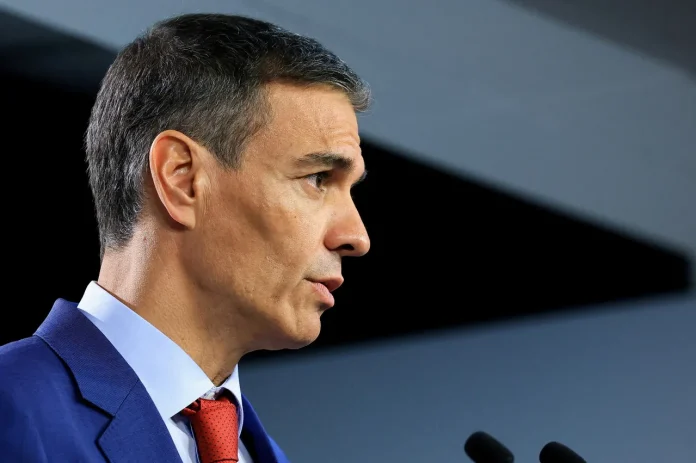
In a televised address on Wednesday, Sánchez said Spain firmly opposes the escalation. “We are against this disaster. Governments are meant to improve the lives of citizens, not worsen them,” he stated, criticizing what he described as attempts to exploit wartime conditions to deflect from domestic shortcomings and benefit narrow interests.
The Spanish leader urged all parties involved to immediately halt hostilities and pursue a diplomatic resolution. While acknowledging Spain’s opposition to Iran’s internal policies, particularly regarding human rights and the treatment of women, Sánchez stressed that military action is not the solution. “We demand a peaceful way forward,” he said, adding that the uncertainty surrounding the objectives of those who initiated the conflict makes it essential to prepare for the possibility of a drawn-out war.
According to Sánchez, the violence has already resulted in hundreds of deaths, including civilians in residential areas and schools, while triggering instability in global stock markets and driving up energy prices. He warned that major wars often begin through miscalculations and misjudgments, referencing the outbreak of World War I as a cautionary example. He also drew parallels with the Iraq War, arguing that it contributed to increased terrorism, higher living costs, migration pressures, and long-term insecurity.
Although Spain has emerged as one of the most outspoken Western critics of the joint US-Israeli strikes, Sánchez emphasized that his country is aligned with broader international principles. “We stand with the values of our constitution, the principles of the European Union, the United Nations Charter, and international law — and therefore with peace,” he said. He rejected the notion that force or unquestioning alignment with allies constitutes responsible leadership.
Sánchez further noted that Spain is evaluating economic measures to shield citizens and businesses from potential fallout linked to the conflict. Authorities in Madrid are also working to repatriate thousands of Spanish nationals currently stranded in the Gulf region.
Washington Signals Trade Retaliation
Meanwhile, tensions between Madrid and Washington have intensified. On Tuesday, US President Donald Trump threatened to suspend trade ties with Spain after Madrid declined to allow American forces to use Spanish military bases for operations against Iran.
Speaking at the White House alongside German Chancellor Friedrich Merz, Trump described Spain as a “terrible” ally and warned that he could halt all trade relations. US Treasury Secretary Scott Bessent added that legal avenues for implementing an embargo had been reaffirmed.
While Sánchez did not directly reference the US statements in his latest address, he declared that Spain “will not be afraid of retaliation.” The Spanish government later issued a formal statement asserting that any changes to commercial relations must comply with international law and existing agreements.
The situation underscores growing diplomatic strains within Western alliances as the regional conflict continues to escalate.


