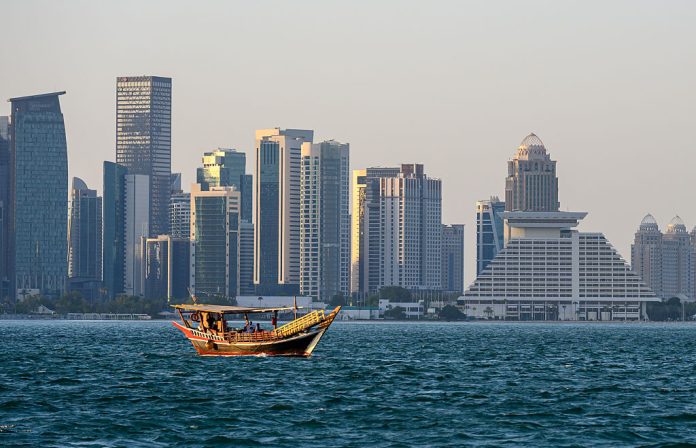

UNIPA News || Doha 30 June-US President Donald Trump said Iran has requested a meeting in Qatar that is scheduled to take place on Tuesday, although Tehran has denied that any direct negotiations with the United States are planned.
In a post on Truth Social on Monday, Trump announced that “Iran has requested a meeting” and said it would be held in Doha, without identifying the participants or providing further details.
White House spokeswoman Karoline Leavitt later said US special envoy Steve Witkoff and senior adviser Jared Kushner would travel to Doha this week for high-level meetings.
Iran, however, rejected suggestions that direct talks with Washington were imminent. Foreign Ministry spokesman Esmaeil Baqaei said an Iranian delegation of technical experts would travel to Doha this week but stressed that no negotiations with the United States were scheduled at any level.
“We have not yet entered the stage of negotiating a final agreement,” Baqaei said, adding that no bilateral meetings with US officials were planned in the coming days.
The conflicting statements came as Iran and Oman held their first meeting on the future management of the Strait of Hormuz since the recent US-Iran agreement aimed at ending hostilities in the region.
Iran’s Deputy Foreign Minister Kazem Gharibabadi said the Joint Hormuz Committee convened during a visit to Muscat, marking the first formal discussions between Tehran and Muscat following the agreement.
The Strait of Hormuz remains one of the most sensitive issues in regional diplomacy. The waterway, bordered by Iran and Oman, is a vital global energy corridor through which around one-fifth of the world’s oil and liquefied natural gas exports traditionally pass.
Iran has insisted that vessels transiting the strait use a designated corridor near its coastline and warned that attempts to bypass the preferred route could heighten regional tensions.
Implementation of the recent memorandum concerning Hormuz remains uncertain, particularly over de-mining operations. France and Oman said in a joint statement that they planned to conduct joint de-mining activities, prompting objections from Tehran.
Gharibabadi said the agreement stipulated that de-mining operations would be carried out solely by Iran and warned France against actions that could complicate the situation.
Maritime traffic through the strait slowed over the weekend following heightened security concerns. Shipping data showed a sharp decline in vessel movements, while dozens of ships reportedly stopped publicly transmitting their positions.
Iran’s Revolutionary Guards said they had introduced stricter traffic control measures in the waterway and warned that vessels violating those rules would face stronger enforcement.
Separately, Israeli military operations continued in southern Lebanon despite a framework agreement intended to advance a peace process between Israel and Lebanon.
Lebanese state media reported an Israeli strike in southern Lebanon on Monday, an area regarded as a stronghold of Hezbollah.
Under the US-brokered framework, Hezbollah is expected to disarm, with responsibility for implementing the process assigned to the Lebanese army. Israeli officials have said their forces will remain deployed in southern Lebanon until those conditions are met, while Hezbollah has publicly opposed the agreement.