

Washington D.C| UNIPA News| 14 July-The United States has carried out a new wave of airstrikes against military targets in Iran, with U.S. Central Command (CENTCOM) confirming the completion of a five-hour operation targeting strategic installations along Iran’s southern coastline.
According to CENTCOM, the strikes concluded at 10:15 p.m. ET on July 13 and targeted maritime capabilities, coastal defense systems, and missile and drone facilities in Bushehr, Chah Bahar, Jask, Konarak, Abu Musa, and Bandar Abbas. The operation marked the third consecutive night of U.S. military action against Iranian targets.
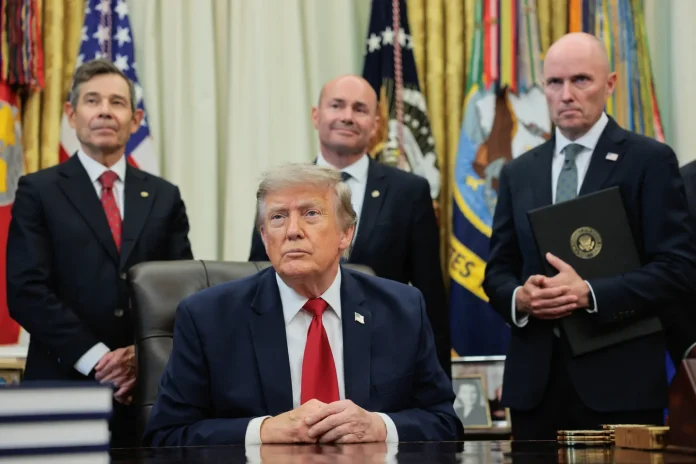
U.S. President Donald Trump said the strikes were aimed at degrading Iran’s military capabilities linked to the Strait of Hormuz, describing the operation as part of ongoing efforts to neutralize threats in the strategically important waterway.
Despite the military escalation, Trump said he believed a diplomatic agreement with Tehran remained possible. He stated that negotiations had recently stalled after Iran requested further discussions on a previously proposed agreement.
The White House also confirmed that President Trump had formally notified Congress that the United States had resumed military operations against Iran, authorizing the Pentagon to continue operations in the region for an additional 60 days under existing legal procedures.
Iran responded by accusing the United States of escalating the conflict. The Islamic Revolutionary Guard Corps (IRGC) said it had launched missile and drone strikes targeting U.S.-related military sites in Bahrain. Iranian state media reported that weapons support warehouses, a satellite communications center, and a residential facility used by U.S. forces were among the targets. Bahrain had earlier urged residents to seek shelter after warning sirens were activated.
CENTCOM separately announced plans to reimpose a blockade on Iranian ports beginning at 2000 GMT on Tuesday. President Trump also stated that the United States would enforce a 20 percent transit fee on cargo passing through the Strait of Hormuz while maintaining unrestricted passage for countries other than Iran.
Iranian Foreign Minister Abbas Araghchi criticized the proposed transit fee, saying compensation for safe passage could be justified but describing the 20 percent charge as excessive.
Meanwhile, Iranian Foreign Ministry spokesman Esmaeil Baqaei said the memorandum of understanding that had formed the basis of recent negotiations was facing serious difficulties, although Tehran continued diplomatic contacts with mediators from Qatar, Pakistan, and Oman in an effort to prevent further escalation.
Iranian state media also reported casualties resulting from the latest U.S. strikes, while Iranian officials said military operations had expanded to include attacks on U.S.-linked facilities in Bahrain, Jordan, and Kuwait. These battlefield claims have not been independently verified.


