
UNIPA News | Tehran |17 July-The United States launched a sixth consecutive night of military strikes against Iran, targeting what US Central Command (CENTCOM) described as military infrastructure aimed at further degrading Iran’s operational capabilities amid escalating hostilities in the Gulf.
According to CENTCOM, US aircraft, drones, and naval assets struck dozens of military targets, including coastal surveillance systems, air defense sites, military logistics infrastructure, and maritime capabilities. The command also announced that US forces boarded an oil tanker in the Gulf of Oman as part of an ongoing blockade of Iranian ports and redirected several commercial vessels attempting to pass through restricted waters.
Iranian state media reported that several civilian facilities were also hit during the strikes, including bridges, a railway station, and an airport. Authorities said attacks were reported near Bandar Abbas, Bushehr, Qeshm Island, and other locations in southern Iran. Iranian officials stated that seven people were killed in the latest wave of strikes.
Iran’s Islamic Revolutionary Guard Corps (IRGC) said it had retaliated by targeting US maritime surveillance radar sites in Oman, as well as military-related targets in Kuwait and Bahrain. The IRGC also claimed responsibility for an attack on a US special operations command center at al-Tanf in southern Syria, describing it as retaliation for the deaths of Iranian personnel in earlier strikes. The United States and Syrian authorities had not commented on the claim.
Jordan’s military separately announced that it intercepted three Iranian missiles on Friday, reporting no casualties or damage.
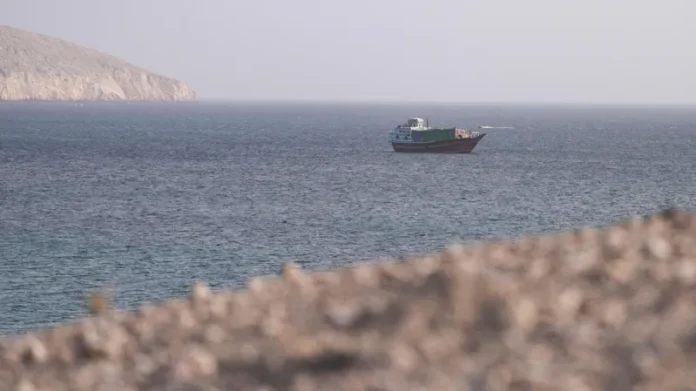
The conflict has continued to disrupt maritime traffic through the Strait of Hormuz, a strategically vital shipping route for global energy supplies. The continued closure of the waterway has raised concerns over international oil exports and energy market stability.
The head of the International Energy Agency (IEA), Fatih Birol, warned that prolonged disruption in the region could significantly affect global energy supplies if the situation fails to improve in the coming weeks.
Diplomatic efforts continued alongside the military confrontation. China and Pakistan called on both Washington and Tehran to halt hostilities and resume negotiations. The White House said President Donald Trump remained open to diplomacy despite the ongoing military campaign, while maintaining that the United States would respond to any attacks on international shipping in the Strait of Hormuz.
Iranian officials reiterated that any future agreement must protect the country’s national interests, emphasizing that Tehran’s security strategy remains closely tied to its position in the Strait of Hormuz.