
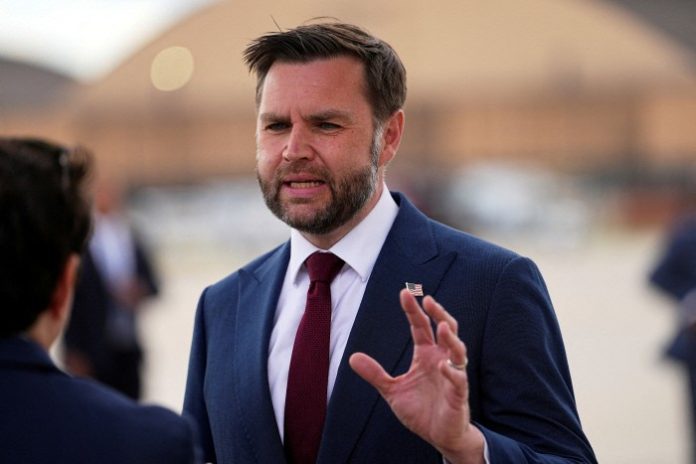

The United States and Iran have signed a memorandum of understanding (MOU) aimed at ending hostilities and establishing a framework for renewed nuclear oversight, according to statements from U.S. Vice President JD Vance.
Speaking to NBC News on June 15, Vance said the agreement would facilitate the resumption of International Atomic Energy Agency (IAEA) inspections in Iran and includes provisions requiring the dismantlement of Iran’s stockpiles of highly enriched nuclear material. He described the measure as a central component of the memorandum.
The full text of the MOU is expected to be released following an official signing ceremony in Switzerland on June 19. Vance stated that both sides are currently refining technical implementation details and that the core provisions of the agreement remain unchanged. He also credited Qatar and Pakistan for their roles in supporting the diplomatic process.
According to Vance, IAEA inspections are expected to begin on June 19. He added that Iran would receive benefits outlined in the agreement provided it fully complies with its obligations.
The agreement has generated differing reactions within the United States. Former President Barack Obama questioned whether the arrangement negotiated by the Trump administration would represent an improvement over the Joint Comprehensive Plan of Action (JCPOA), the nuclear agreement reached during his administration.
Responding to those remarks, Vance argued that the current deal differs fundamentally from the JCPOA. He said the earlier agreement sought to limit an existing nuclear program through economic incentives, whereas the new arrangement follows what he described as the dismantling of Iran’s nuclear infrastructure and focuses on preventing its re-establishment.
On maritime security, Vance said the agreement guarantees unrestricted passage through the Strait of Hormuz during a 60-day period set aside for negotiations on a final accord. He downplayed Iranian discussions about potential transit fees for commercial vessels, describing them as domestic political messaging rather than a reflection of the agreement’s terms.
Iranian President Masoud Pezeshkian also commented on the development, describing the MOU as an important step toward ending the conflict and opening the door to structured negotiations. However, he emphasized that discussions on a comprehensive and final agreement remain ongoing.


