
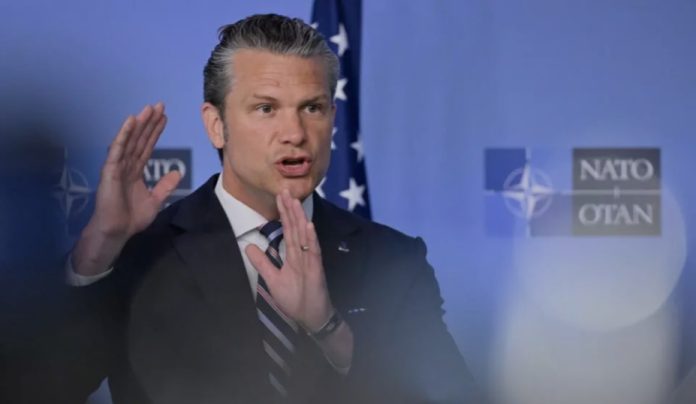

UNIPA News(Washington D.C) 18 June-The United States will review its military presence in Europe within the next six months, US Defense Secretary Pete Hegseth announced during a meeting of NATO defense ministers in Brussels on Thursday, as Washington intensifies pressure on European allies to increase defense spending and assume greater responsibility for the continent’s security.
Hegseth said the review would assess whether NATO members are moving “fast and irreversibly” toward taking primary responsibility for Europe’s defense. According to him, the evaluation would determine which countries are meeting Washington’s expectations and which are falling short.
The Pentagon chief also criticized several European allies for imposing restrictions on US military operations during the recent US-Israeli war involving Iran. He argued that such measures complicated American military activities and raised concerns over the reliability of allied support.
In addition, Hegseth warned that future US financial contributions to NATO’s organizational budget could depend on whether member states meet agreed defense spending targets. He said Washington may reduce its contributions if allies fail to increase military expenditures with sufficient urgency.
The remarks are expected to heighten concerns among European governments about the long-term extent of US military commitments to the continent, particularly as Washington shifts strategic focus toward China and encourages Europe to strengthen its own defense capabilities.
NATO Secretary General Mark Rutte highlighted recent progress, stating that European allies and Canada are projected to spend more than $90 billion extra on defense in 2025 compared with the previous year, representing an increase of nearly 20 percent.
The United States has already informed allies that it is reducing some military assets assigned to NATO operations. Reports from US and German media indicate that the reductions could include fighter aircraft, reconnaissance and refueling platforms, bombers, drones, a cruise missile-capable submarine, and one of two aircraft carrier groups currently allocated to the alliance.
German Defense Minister Boris Pistorius acknowledged that European allies could eventually compensate for many of the withdrawn capabilities but warned that rapid reductions without clear replacement timelines could pose security challenges for NATO’s European members.
Despite concerns over force reductions, Rutte emphasized that the United States remains committed to NATO’s collective defense obligations. He said all allies, including Washington, would fully mobilize available resources if the alliance faced a direct military threat.
Defense ministers are also expected to discuss additional military assistance for Ukraine during the Brussels meetings. Ukrainian President Volodymyr Zelensky is set to participate in talks with Kyiv’s international backers, while NATO officials anticipate new commitments of military support.