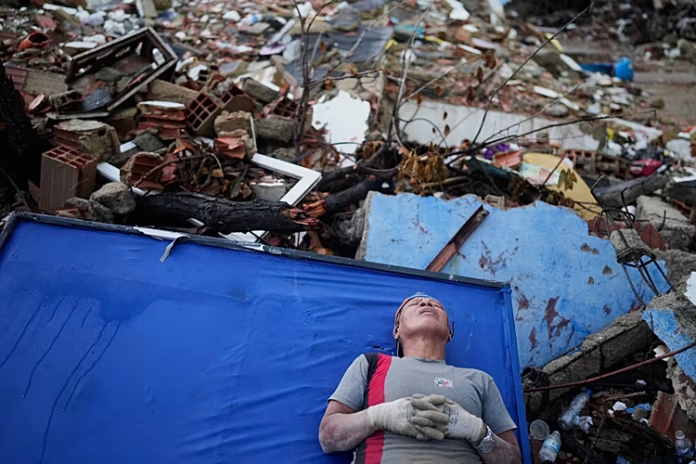

UNIPA News(Caracas) 02 July-Doctors and humanitarian agencies have warned that Venezuela is on the brink of a severe public health crisis following the powerful earthquakes that struck on June 24, killing at least 2,295 people and injuring more than 11,000.
Thousands of displaced residents remain in overcrowded shelters or are sleeping outdoors without access to clean water, while deteriorating sanitation conditions have heightened concerns over the spread of infectious diseases. Aid workers say the humanitarian situation could worsen significantly unless urgent medical and public health interventions are expanded.
Medical professionals report that the emergency is entering a new phase as infections begin to threaten survivors who have remained exposed to harsh conditions for extended periods.
“The issue we foresee just around the corner is the infections that patients who have been exposed to the disaster for the longest time might bring,” said Eugenio Cova, head of the trauma unit at Hospital del Oeste Dr. José Gregorio Hernández in Caracas. He said hospitals have already managed large numbers of complex trauma cases, but infections are becoming an increasing concern.
Humanitarian agencies have also warned that widespread damage to infrastructure could trigger disease outbreaks in the hardest-hit communities. Poor waste disposal, accumulated debris, limited access to safe water and high temperatures have increased the risk of vector-borne diseases.
Veronique Durroux, spokesperson for the United Nations humanitarian agency for Latin America and the Caribbean, said waste and debris management remain major challenges following the widespread destruction, raising concerns about public health in affected areas.
The disaster has further exposed Venezuela’s longstanding healthcare challenges, including shortages of medical personnel caused by years of economic difficulties, underfunding and the emigration of healthcare professionals.
International relief operations have continued to expand. The United States has deployed 900 military personnel to assist rescue and humanitarian efforts, including repairing a damaged runway at the main international airport serving Caracas to facilitate the delivery of aid. Additional naval assets have been positioned offshore to support evacuation and relief operations, while another 100 personnel from the US State Department have joined the response.
The United States has pledged 300 million dollars in humanitarian assistance through aid organizations and the United Nations. However, the estimated cost of earthquake-related damage exceeds 6.7 billion dollars, according to satellite-based assessments by the UN Development Programme.
Rescue efforts remain ongoing with support from around 50 international teams, including personnel from Ecuador and Israel. Despite diminishing chances of finding survivors, rescue workers continue searching collapsed structures and recently rescued a toddler who had been trapped beneath rubble for six days.